Who Was Virginia Cherrill?
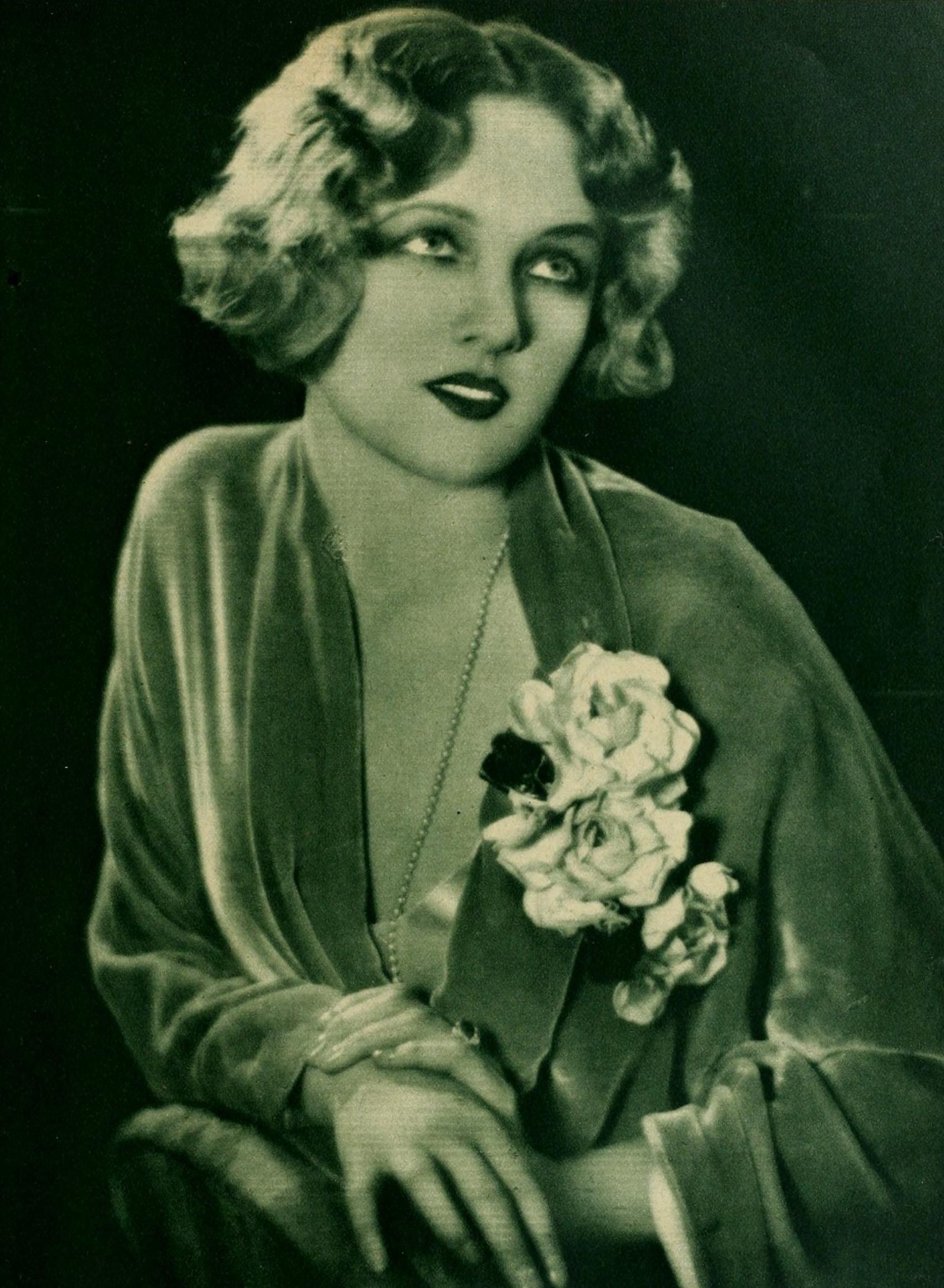
Virginia Cherrill was an American actress best remembered as the blind flower girl in Charlie Chaplin’s City Lights (1931) — and she was Cary Grant’s first wife.
Her film career lasted less than a decade, but her life reads like a novel: a farm girl from Illinois who became a Hollywood actress, married one of cinema’s greatest leading men, became a British countess, and finally spent nearly half a century in quiet retirement in Santa Barbara, California.
She married four times and had no children. She died in 1996, aged 88.
Early life
Virginia Cherrill was born on 12 April 1908 on a farm in rural Carthage, Illinois, to James E. and Blanche (née Wilcox) Cherrill. She attended schools in Chicago and Kenosha, Wisconsin.
She did not at first plan on a film career. In 1925 she was voted “Queen of the Artists Ball” in Chicago, and the impresario Florenz Ziegfeld invited her to perform on the variety stage — an offer she declined.
Her first marriage — before Cary Grant
It is important to get this right: Cary Grant was Virginia Cherrill’s second husband, not her first.
Her first husband was Irving Adler, a rich Chicago lawyer. They married in 1925 and divorced in 1928. She found the marriage unsatisfying, and through her friendship with actress Sue Carol she left for California, where she met William Randolph Hearst and then, in Hollywood, Charlie Chaplin.
Chaplin and Cherrill met when he sat next to her at a boxing match — although Chaplin wrote in his autobiography that she approached him on the beach and asked him to cast her in his film.
City Lights and her film career
Chaplin cast Cherrill as the blind flower girl in City Lights (1931), the role for which she is still remembered today. The film was a success, but their working relationship was often strained. Chaplin briefly fired her during filming — by her account, for returning late from lunch; by another account, for asking to leave early for a hairdressing appointment on the day of the emotional climactic shoot. Chaplin planned to re-film all her scenes with Georgia Hale, but realised too much money had already been spent. On the advice of her close friend Marion Davies, Cherrill held out for more money when Chaplin asked her to return.
Even before City Lights was released, 20th Century Fox had signed her to a contract. After the film’s success, the studio put her to work in early sound films of the 1930s: Girls Demand Excitement (1931), one of John Wayne’s early films as a star; The Brat (1931), directed by John Ford; the Gershwin musical Delicious (1931) with Janet Gaynor; and Fast Workers (1933), directed by Tod Browning.
She then went to Britain, where she starred in two of James Mason’s earlier films, including Troubled Waters (1936), which turned out to be her last film. None of these later films were hits, and she gave up her film career, saying that she was “no great shakes as an actress.”
Marriage to Cary Grant
In July 1932, considerable publicity attended her engagement to the wealthy William Rhinelander Stewart Jr. The two sailed from Hawaii on Vincent Astor’s yacht, on which the ceremony was planned — but they returned having broken off the wedding by mutual consent.
She married actor Cary Grant on 9 February 1934 at the Caxton Hall register office in London. Grant, born Archibald Alec Leach in Bristol, England, was 30; Cherrill was 25. She was his first wife — he would go on to marry five times in total.
The marriage lasted just over a year and ended bitterly. Cherrill received a divorce on 26 March 1935 in Los Angeles, after alleging that Grant was abusive toward her. The divorce case was widely reported in the press, with Cherrill demanding $1,000 a week from him in benefits from his Paramount earnings.
They had no children together.
Grant went on to become one of classic Hollywood’s definitive leading men, in films such as Bringing Up Baby (1938), His Girl Friday (1940), Notorious (1946) and North by Northwest (1959). He died of a stroke on 29 November 1986 in Davenport, Iowa, aged 82 — ten years before Cherrill died.
Countess of Jersey
In 1937, Cherrill married George Child-Villiers, 9th Earl of Jersey, becoming Virginia Child Villiers, Countess of Jersey. The marriage lasted until their divorce in 1946.
Her final marriage — 48 years in Santa Barbara
Cherrill finally settled down with her fourth husband, Florian Kazimierz Martini, a Polish flying ace whose squadron she had looked after during the Second World War. They married in 1948, and at the time of her death they had been married for 48 years.
Martini found work with Lockheed in Santa Barbara, California, where they lived from 1948 until her death in 1996.
Her death in 1996
Virginia Cherrill died on 14 November 1996 at a hospital in Santa Barbara, California. She was 88 years old. She was buried at Santa Barbara Cemetery.
She has a star on the Hollywood Walk of Fame at 1545 Vine Street.
Why her story matters
Like the other first wives in this series, Virginia Cherrill is usually introduced as someone else’s spouse — Cary Grant’s first wife. But she had a life and a career of her own before she ever met him: a Chaplin leading lady at 22, a countess at 29, and then nearly half a century of quiet married life in California. The Grant marriage lasted barely a year; the City Lights performance is still watched today.
Quick facts
| Full name | Virginia Cherrill (later Virginia Child Villiers, Countess of Jersey; later Virginia Martini) |
| Born | 12 April 1908, Carthage, Illinois, USA |
| Died | 14 November 1996, Santa Barbara, California, USA (aged 88) |
| Cause of death | Not publicly confirmed |
| Occupation | Actress |
| Years active | 1928–1936 |
| Best known for | The blind flower girl in Charlie Chaplin’s City Lights (1931) |
| First husband | Irving Adler (m. 1925, div. 1928) |
| Second husband | Cary Grant (m. 9 February 1934, div. 26 March 1935) |
| Third husband | George Child-Villiers, 9th Earl of Jersey (m. 1937, div. 1946) |
| Fourth husband | Florian Martini (m. 1948 until her death) |
| Children | None |
| Honours | Star on the Hollywood Walk of Fame, 1545 Vine Street |
Frequently asked questions
Who was Virginia Cherrill?
Virginia Cherrill was an American actress best known as the blind flower girl in Charlie Chaplin’s City Lights (1931). She was also Cary Grant’s first wife, and later Countess of Jersey.
Was Cary Grant Virginia Cherrill’s first husband?
No — this is a common mix-up. Cherrill was Grant’s first wife, but Grant was her second husband. Her first husband was Irving Adler, a Chicago lawyer, whom she married in 1925 and divorced in 1928.
How long were Virginia Cherrill and Cary Grant married?
They married on 9 February 1934 in London and divorced on 26 March 1935 in Los Angeles — just over a year. The divorce was bitter and widely reported, with Cherrill alleging that Grant was abusive toward her.
What was Virginia Cherrill famous for?
Her role as the blind flower girl in Charlie Chaplin’s City Lights (1931). She also appeared in Girls Demand Excitement (1931) with John Wayne, The Brat (1931) directed by John Ford, and Fast Workers (1933) directed by Tod Browning.
Did Virginia Cherrill have children?
No. She married four times and had no children.
When did Virginia Cherrill die?
She died on 14 November 1996 at a hospital in Santa Barbara, California, aged 88. She is buried at Santa Barbara Cemetery.
Is Cary Grant still alive?
No. Cary Grant died of a stroke on 29 November 1986 in Davenport, Iowa, aged 82 — ten years before Virginia Cherrill died.
Read next: Who Was Herbert Leigh Holman? Vivien Leigh’s First Husband, His Life & Death — another first spouse whose own story is usually told through a famous partner. Also read Who Was Edward Judson? Rita Hayworth’s First Husband, His Life & Career, Who Was Mel Ferrer? Audrey Hepburn’s First Husband, His Life & Death and Who Was Maggie Johnson? Clint Eastwood’s First Wife, Her Life & Death in 2026.